
Spalling Brick: Why It Happens and When to Repair or Rebuild
· By Clemente Neto
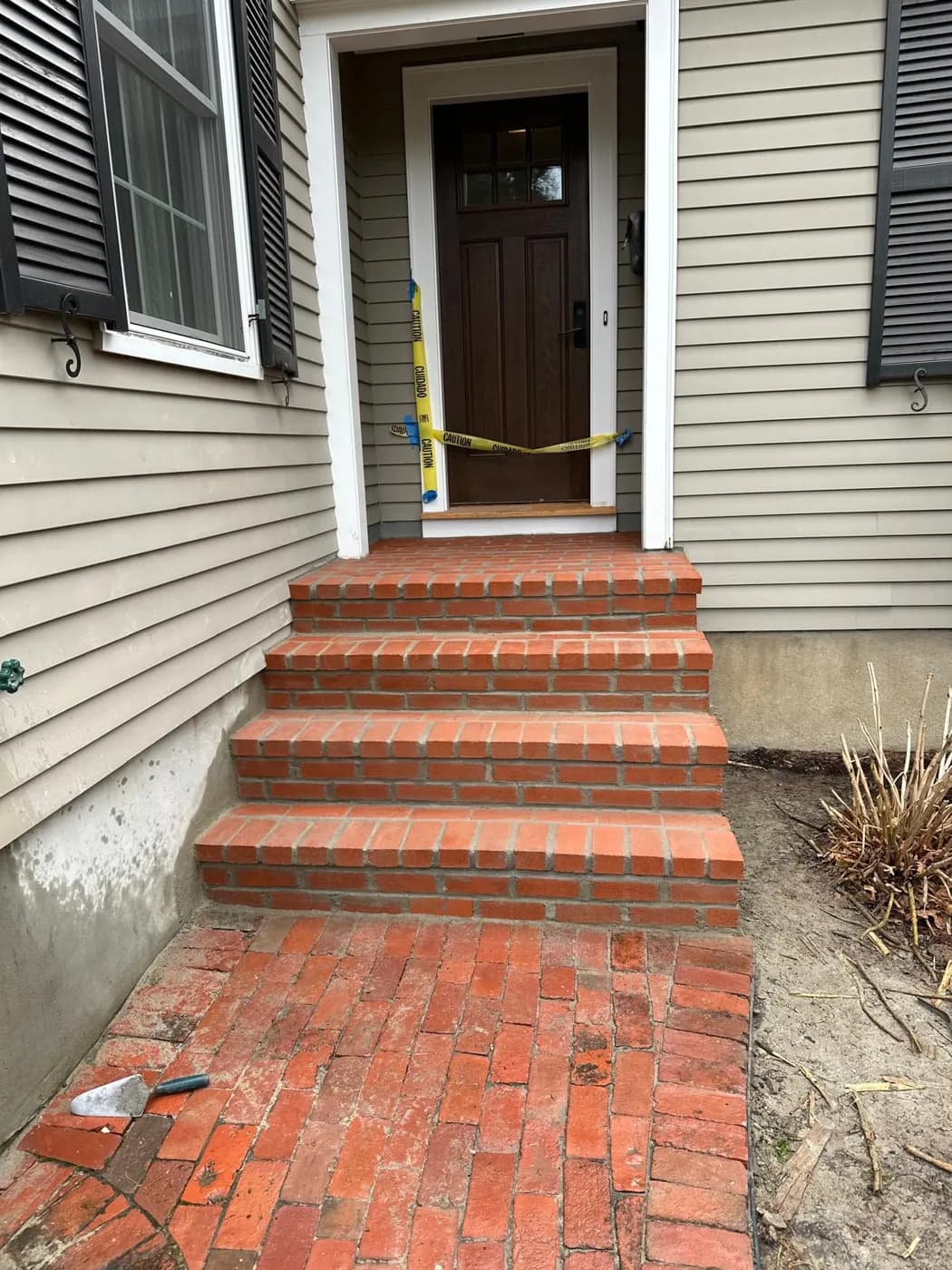
If you have ever swept up flakes of red brick from your front steps after a Massachusetts winter, you have seen spalling. The face of the brick pops off, leaving a rough, crumbly surface underneath. It starts small, a chip here and there, and then seems to spread faster every year.
Spalling is one of the most common masonry problems in Greater Boston, especially on front steps, chimneys and low walls. This guide explains what causes it, why it gets worse quickly, how it is repaired, and how to tell when patching is no longer enough and a rebuild makes more sense.
What spalling is
Spalling is when the outer face of a brick breaks away. Sometimes it is a thin flake, sometimes a whole chunk of the face comes off. Underneath, the brick is softer and more porous than the fired outer skin, so once spalling starts, that exposed surface soaks up even more water.
You will see it most on surfaces that stay wet and get hit by weather: the treads and sides of brick steps, the top courses of a chimney, the bottom of walls near soil, and areas under leaky gutters or sills.
Why brick spalls: water, freezing and salt
The main cause is freeze-thaw. Brick is porous, so it absorbs water from rain, snowmelt and the ground. When the temperature drops below freezing, that water turns to ice and expands. The pressure pushes outward from inside the brick and breaks off the face. In New England, where temperatures can cross the freezing line many times in one winter, this happens over and over.
Road salt and ice melt make it worse. Salt solutions soak into the brick, and as they dry they form crystals that also expand inside the pores. That is why front steps and walkways near the street tend to spall faster than walls on the back of the house. Hard cement mortar used in past repairs is another common cause: when the mortar is harder than the brick, the brick takes the stress and fails first.
Why spalling speeds up
Once the hard outer face is gone, the softer core absorbs water much faster. More water means more freeze damage the next winter, which exposes more soft brick. That cycle is why a step that had a few flaky bricks two years ago might have a dozen crumbling ones today.
It also spreads to nearby mortar joints, which open up and let more water into the whole structure. On steps, water that gets into the core can wash out the fill underneath and cause sinking or loose treads. On chimneys, it can loosen the top courses until bricks start falling.
Repair options for spalled brick
When spalling is limited to a handful of bricks and the rest of the structure is solid, the usual repair is to cut out the damaged bricks and replace them with sound brick that matches in size, color and hardness. On older homes, reclaimed or carefully matched brick helps the repair blend in. The surrounding joints are repointed with a mortar that is softer than the brick, so future stress goes into the joint instead of the brick face.
Some brick can be turned around, meaning the damaged brick is removed and reinstalled with the undamaged back face out. This only works when the back is in good shape and the bricks are a standard size. Surface patching compounds exist, but on steps and chimneys exposed to New England winters they often pop off within a few seasons.
When steps or a chimney need a rebuild
Repair stops making sense when spalling is widespread, when bricks are loose throughout rather than in one area, when steps have sunk, tilted or separated from the house, or when a chimney is leaning or moves when pushed. At that point you would be replacing so many bricks that the labor approaches a rebuild, and the base or core underneath is likely compromised too.
For front steps, a rebuild is also a chance to rethink the material. Many homeowners in Everett, Arlington and Melrose replace spalled brick steps with granite treads over a brick or stone base, because granite resists salt and water much better. For chimneys, rebuilding the damaged section from the roofline up with matching brick and a new crown is often the long-term fix.
How to check your brick for early spalling
Catching spalling early keeps the repair small. Each spring, walk around the house and look closely at the brick on steps, chimneys, walls near grade and anything under a gutter or sill. Look for bricks with flaking or powdery faces, small piles of red grit at the base of steps or walls, and bricks that sound hollow or feel loose when you press on them.
From the ground, binoculars help with the chimney. Missing corners, rough patches and dark, damp-looking areas near the top are all signs worth a closer look. Check the mortar joints around any damaged bricks too, because failing mortar and spalling usually travel together.
Take photos each year from the same spots. Comparing them makes it easy to see whether the damage is stable or spreading, and it gives a mason a clear picture when you ask for an estimate.
Cost and how to prevent spalling
As a rough guide, replacing a few spalled bricks and repointing around them is often a few hundred dollars to a couple thousand, depending on access and how many bricks are involved. A full rebuild of brick front steps or a chimney top commonly runs into the several thousands. Ranges vary widely, so an on-site estimate is the only way to get a real number for your situation.
To slow spalling down, keep water off the brick. Fix gutters and downspouts that spill onto steps or walls, repair cracked chimney crowns, add a chimney cap and keep soil and mulch away from brick. On steps, shovel snow promptly and use a de-icer labeled safe for masonry instead of rock salt. A breathable masonry water repellent can help on sound brick, but only after leaks are fixed, because sealing in moisture can make spalling worse.
Frequently asked questions
- Can spalling brick be repaired?
- Yes, if the damage is limited. Spalled bricks can be cut out and replaced with matching brick, and the joints repointed with the right mortar. When spalling is widespread or the structure is loose or sinking, a rebuild is usually the better value.
- Is spalling brick dangerous?
- It can be. On steps, crumbling brick and loose treads create trip hazards. On chimneys, spalling near the top can loosen bricks that may fall from the roof. Both should be looked at before they get worse.
- Does sealing brick prevent spalling?
- Only in the right conditions. A breathable, penetrating water repellent can help on sound brick once the water source is fixed. A film-forming sealer or sealing wet brick can trap moisture and make spalling worse.
- Why are my brick steps spalling but not my walls?
- Steps sit flat and hold water, take foot traffic and get exposed to road salt and ice melt. Walls shed water faster. That combination is why steps usually spall first on Massachusetts homes.
- What is the best time to repair spalled brick?
- Spring through fall, when temperatures stay above freezing so mortar can cure. If steps are unsafe in winter, a temporary fix can make them usable until a full repair is possible.
Related services
Found this helpful? Make us a preferred source on Google.
Ready for an exact price?
Get a free, no-pressure in-home estimate. Real numbers for your home, not a phone guess.