
Masonry in Lexington, MA: Historic Districts, Stone Walls and Modern Homes
· By Clemente Neto
Few towns carry their history as visibly as Lexington. Colonial era houses sit within sight of the Battle Green, old fieldstone walls still mark former farm boundaries, and a few neighborhoods hold some of the best known mid-century modern homes in New England. Each of these brings different masonry questions.
This guide explains how Lexington's historic districts work, what tends to need repair on different kinds of homes, rough market costs, and how to plan a project without surprises.
Lexington's four local historic districts
Lexington has four local historic districts: Battle Green, Hancock-Clarke, Munroe Tavern and East Village. They are overseen by the Historic Districts Commission, which reviews exterior changes visible from a public way and issues Certificates of Appropriateness before work can go ahead.
For masonry, that can include rebuilding front steps, changing a chimney, adding a stone wall or replacing a walkway in view of the street. If your home is inside one of these districts, plan for a review step before the building permit, and expect questions about materials. Matching the existing brick, stone and mortar color is often what the commission wants to see. Ordinary repairs that replace like with like may follow a simpler path, but the commission is the right place to confirm that.
Fieldstone walls and old farm land
Much of Lexington was farmland, and dry-laid fieldstone walls still run along roads and between yards. The Five Fields neighborhood, for example, was built in the early 1950s on a former dairy farm where stone walls divided the land into five fields, which gave it its name.
Old dry stone walls slump over time as frost heaves stones and roots push them apart. Resetting a fallen section uses the same stones and the same dry-laid method, which keeps the wall looking original. Where a wall is now acting as a retaining wall because of regrading or a new driveway, it may need to be rebuilt with a footing and drainage, since dry walls were never built to hold back much soil.
When resetting a wall, it helps to keep the larger, flatter stones for the base and the top course, and to batter the wall slightly so it leans back into the slope. That is how many of the original farm walls were built, and it is a big part of why they lasted as long as they did.
Mid-century modern neighborhoods
Lexington is known for planned modernist neighborhoods: Six Moon Hill, started in 1948 by The Architects Collaborative, then Five Fields in 1951 and Peacock Farm in 1955. These homes often have flat or low-pitched roofs, large glass walls, and simple masonry elements such as a single central chimney, low stone or brick walls and minimal entry steps.
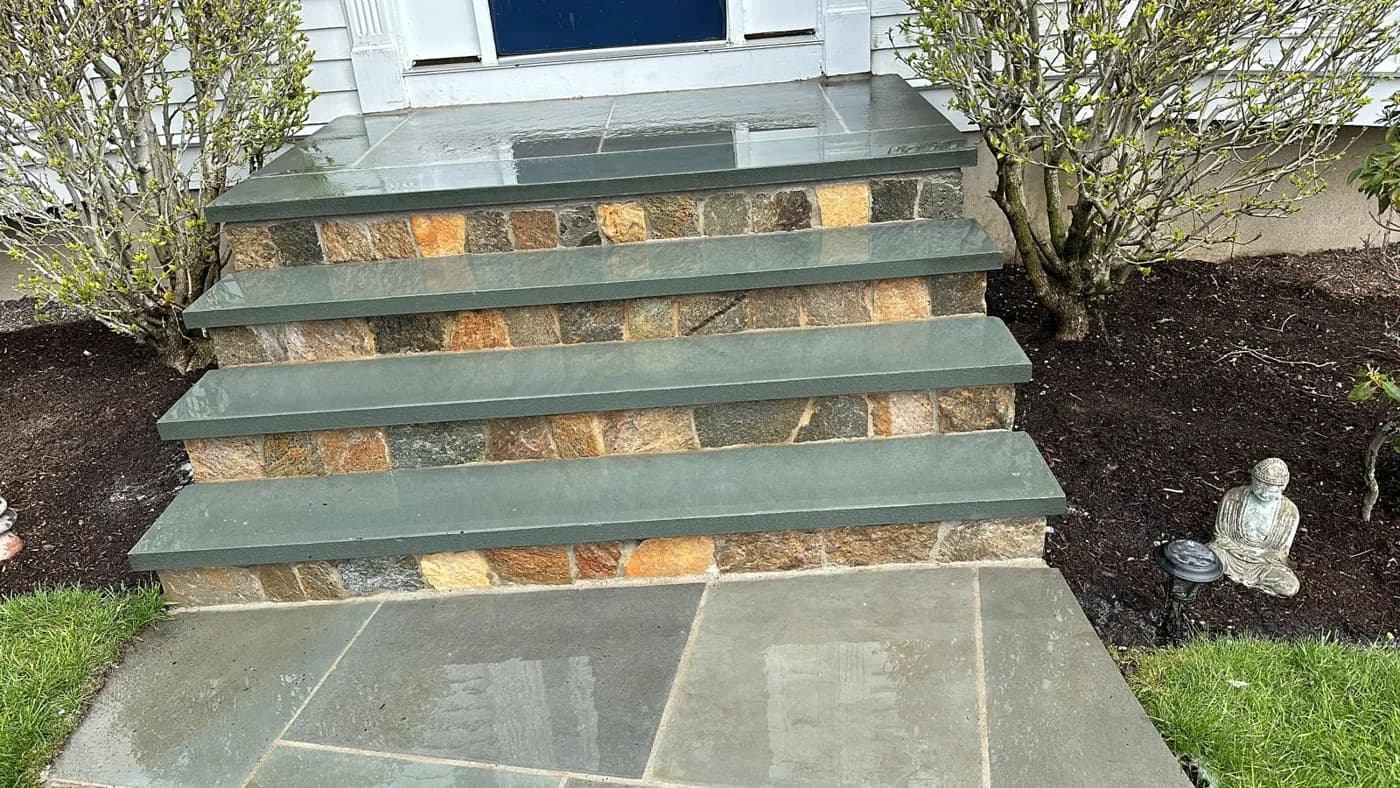
Masonry on these homes is about restraint. A heavy granite stair or ornate brick pattern can look wrong against clean modern lines. Simple bluestone treads, plain concrete or flagstone paths and carefully matched chimney brick usually suit the architecture better. Low-slope roofs also put extra stress on chimney flashing, so a leak near the chimney on a modern house often comes from flashing rather than the brick itself.
Chimneys on Colonial and antique homes
Older Lexington homes often have large central or end chimneys, some rebuilt more than once over the years. Antique brick is softer than modern brick, so it needs a softer, lime-based mortar. Repointing an old chimney with a hard modern cement mortar can make the brick face crack and spall as moisture gets trapped.
Common issues are a cracked crown, loose top courses, failed flashing and a chimney that no longer vents anything but still faces full weather. A chimney inspection before repair tells you whether repointing is enough or whether part of the stack needs to be rebuilt.
Typical costs in Lexington
As a rough market guide, resetting a section of dry fieldstone wall can cost a few hundred to a few thousand dollars depending on length and height. New entry steps in bluestone or granite commonly run from several thousand dollars up, and work in a historic district can add time for review and for sourcing matching materials. Chimney repointing and crown repair often fall in the low thousands, with full rebuilds above the roofline costing more.
Treat these as typical ranges only. Historic review, material matching and access all move the price. A free on-site estimate is the best way to get a figure for your home.
Planning a masonry project in Lexington
Start by checking whether your property is inside a local historic district. If it is, contact the Historic Districts Commission before you finalize a design. Next, ask the building department whether your project needs a permit; chimney rebuilds, steps that serve a main entrance and taller retaining walls commonly do.
Lexington also has a Historical Commission that may review the demolition of significant older buildings, so major removals deserve a call. Finally, take photos of the existing masonry before work begins. On older homes they help match materials, and they are useful for any review.
Frequently asked questions
- Which parts of Lexington are local historic districts?
- Lexington has four local historic districts: Battle Green, Hancock-Clarke, Munroe Tavern and East Village. Exterior changes visible from a public way generally need approval from the Historic Districts Commission.
- Do I need approval to rebuild steps in a Lexington historic district?
- Often yes, if the steps are visible from a public way. Contact the Historic Districts Commission early. Replacing like with like may follow a simpler process, but the commission confirms that.
- Can an old fieldstone wall be repaired instead of replaced?
- Usually. Fallen sections of a dry-laid wall can be reset with the original stones using the same dry method. If the wall now holds back soil, it may need a footing and drainage.
- What masonry suits a mid-century modern home in Lexington?
- Simple materials and clean lines, such as bluestone treads, flagstone paths and plain brick that matches the original chimney. Ornate patterns tend to clash with modernist design.
- Why should old chimneys be repointed with lime mortar?
- Antique brick is soft. A lime-based mortar lets moisture escape through the joints. Hard cement mortar can trap moisture in the brick and cause the face to crack and flake.
Related services
Serving
Found this helpful? Make us a preferred source on Google.
Ready for an exact price?
Get a free, no-pressure in-home estimate. Real numbers for your home, not a phone guess.