
Masonry in Arlington, MA: Two-Families, Historic Districts and Brick Steps
· By Clemente Neto
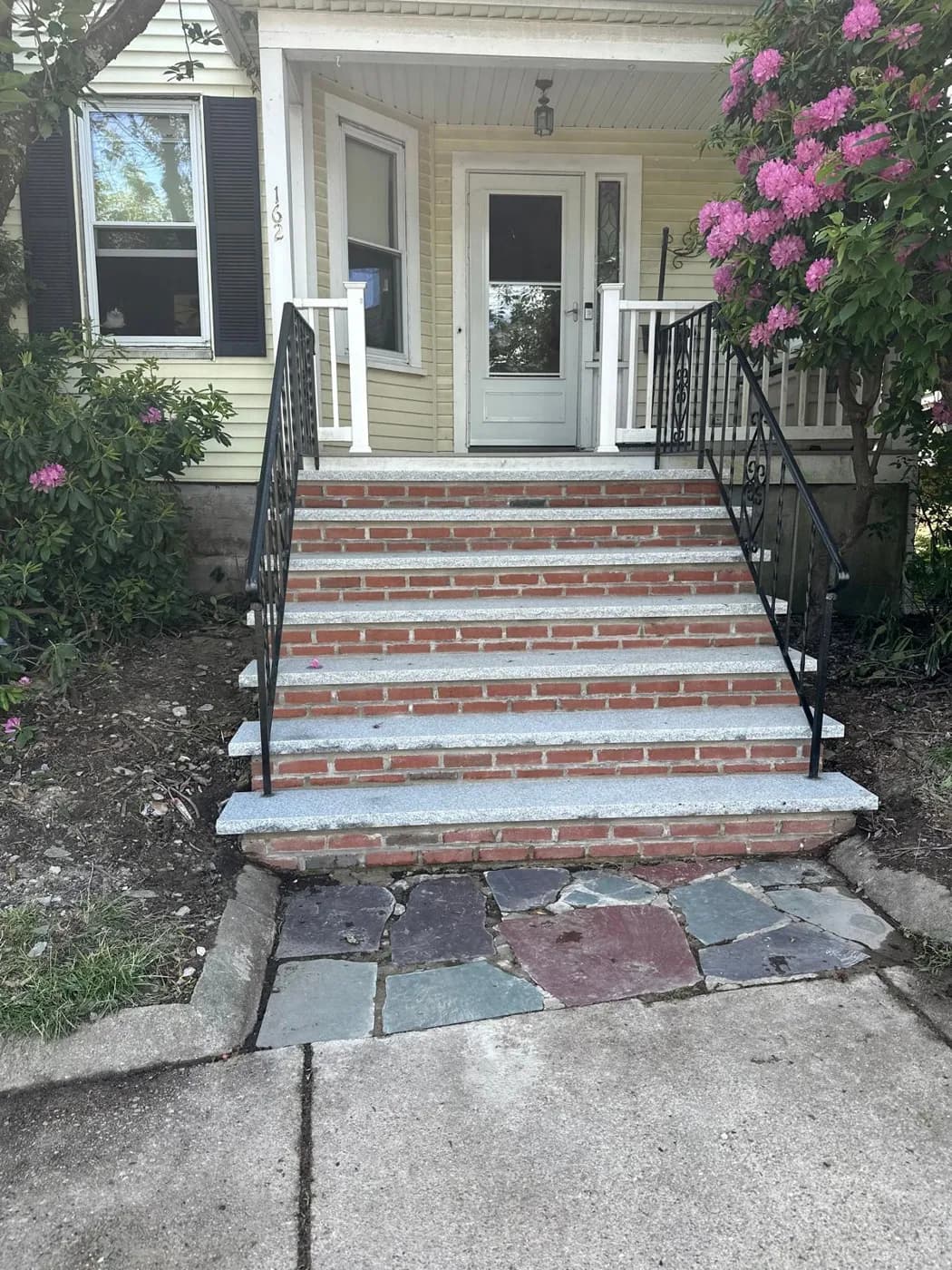
Arlington's housing tells the story of a town that grew along a main road and a railroad line. Older Colonial and Victorian homes cluster near Massachusetts Avenue, East Arlington is full of two-family houses on compact lots, and Arlington Heights climbs toward the western edge of town. Almost all of it is old enough that brick and mortar need regular attention.
This guide covers the repairs Arlington owners most often face, how the town's historic districts work, rough cost ranges and what to check before hiring anyone.
Arlington's seven local historic districts
Arlington has seven local historic districts: Broadway (1977), Central Street (1982), Russell (1983), Pleasant Street (1988), Mount Gilboa and Crescent Hill (1991), Avon Place (1996) and Jason and Gray (1998). They are administered by the Arlington Historic District Commissions.
If your home is inside one of them, exterior changes visible from a public way, including new or rebuilt steps, walls and chimney changes, generally need commission approval before a building permit. The commissions tend to care about materials and appearance, such as brick color, mortar joint style and railing design. Contact them early and bring photos of what exists today.
Repointing older brick
Repointing means removing deteriorated mortar from the joints and replacing it with fresh mortar. It is the most common masonry repair on older Arlington homes, whether on a chimney, a foundation, a garden wall or a brick stair. Signs you need it include mortar that crumbles when you scrape it, joints recessed well behind the brick face, and loose bricks.
On older homes, the mortar should be softer than the brick. Many houses in town were built with relatively soft brick, and a hard cement mortar can force moisture and stress into the brick, causing the face to crack and flake. A good contractor will match the strength and color of the original mortar, not just fill the gap.
Timing matters too. Mortar needs moderate temperatures to cure properly, so repointing in the Arlington area is usually scheduled from spring through fall, avoiding hard freezes. A small emergency patch can buy time over winter until a full repair is possible.
Brick steps on two-family homes
Two-family homes often share one set of front steps, or have two entries close together. That doubles the traffic and, in winter, the salt. Brick steps on these houses commonly show loose treads, washed-out joints, cracked risers and railing posts that have rusted or loosened in the brick.
A small amount of damage can be fixed by resetting bricks and repointing. When the steps have settled or the core is saturated, rebuilding is often the better value, and many owners add granite treads to brick risers so the walking surface lasts longer. If you share the steps with another owner, agree on the scope and cost split in writing before work starts.
Railings deserve their own look. Iron posts set directly into brick often rust at the base, and the rust expands and cracks the surrounding brick. Resetting posts with a proper sleeve or base plate during a step repair helps the new work last.
Arlington Heights and sloped streets
Parts of Arlington, especially around Arlington Heights and the Mount Gilboa and Crescent Hill area, sit on hills. Homes there are more likely to have long entry stairs, retaining walls along the sidewalk and driveways that need side walls to hold back soil.
Old walls along the street often show leaning, bulging or cracking from frost and water pressure. Rebuilding with a proper footing, drainage stone and an outlet for water addresses the cause. Taller walls, and walls next to a driveway, may need a building permit and sometimes an engineered design.
Chimneys and old heating systems
Many Arlington homes have converted their heating systems over the years, leaving brick chimneys that no longer vent anything but still face full weather. Leaks near the chimney, loose top bricks and a cracked crown are common. Sometimes the right answer is repair, sometimes it is taking an unused chimney down below the roofline and closing the roof properly.
If the chimney is inside a historic district and visible from the street, removing or significantly changing it may need commission review. Ask before you decide.
Typical cost ranges
As a rough market guide, spot repointing and small step repairs often land in the low thousands of dollars. Rebuilding a set of brick front steps commonly runs from several thousand dollars to the low five figures, depending on size, granite and railings. Chimney repairs range from a few hundred dollars for minor fixes to several thousand or more for rebuilding above the roofline.
These are typical ranges only. Historic review, access, staging and hidden conditions affect price. A free on-site estimate is the way to get a real number.
Frequently asked questions
- How many local historic districts does Arlington, MA have?
- Seven: Broadway, Central Street, Russell, Pleasant Street, Mount Gilboa and Crescent Hill, Avon Place, and Jason and Gray. Exterior changes in them generally need approval from the Arlington Historic District Commissions.
- How do I know if my brick needs repointing?
- Scrape a joint with a key. If the mortar crumbles easily, if joints are recessed well behind the brick face, or if bricks are loose, repointing is likely needed.
- Who pays for shared front steps on a two-family home?
- That depends on the ownership arrangement, such as a condo association or a single owner with a tenant. For shared ownership, agree on the scope and cost split in writing before hiring a contractor.
- Can I remove an unused chimney in Arlington?
- Often yes, with a building permit. If the home is in a local historic district and the chimney is visible from a public way, check with the Historic District Commissions first.
- When is the best time of year to repoint brick in Arlington?
- Spring through fall is typical, when temperatures stay above freezing long enough for mortar to cure. Repointing during hard freezes risks weak joints, so winter work is usually limited to temporary patches.
Related services
Serving
Found this helpful? Make us a preferred source on Google.
Ready for an exact price?
Get a free, no-pressure in-home estimate. Real numbers for your home, not a phone guess.