
How Much Do Granite Steps Cost in Massachusetts? (2026 Guide)
· By Clemente Neto
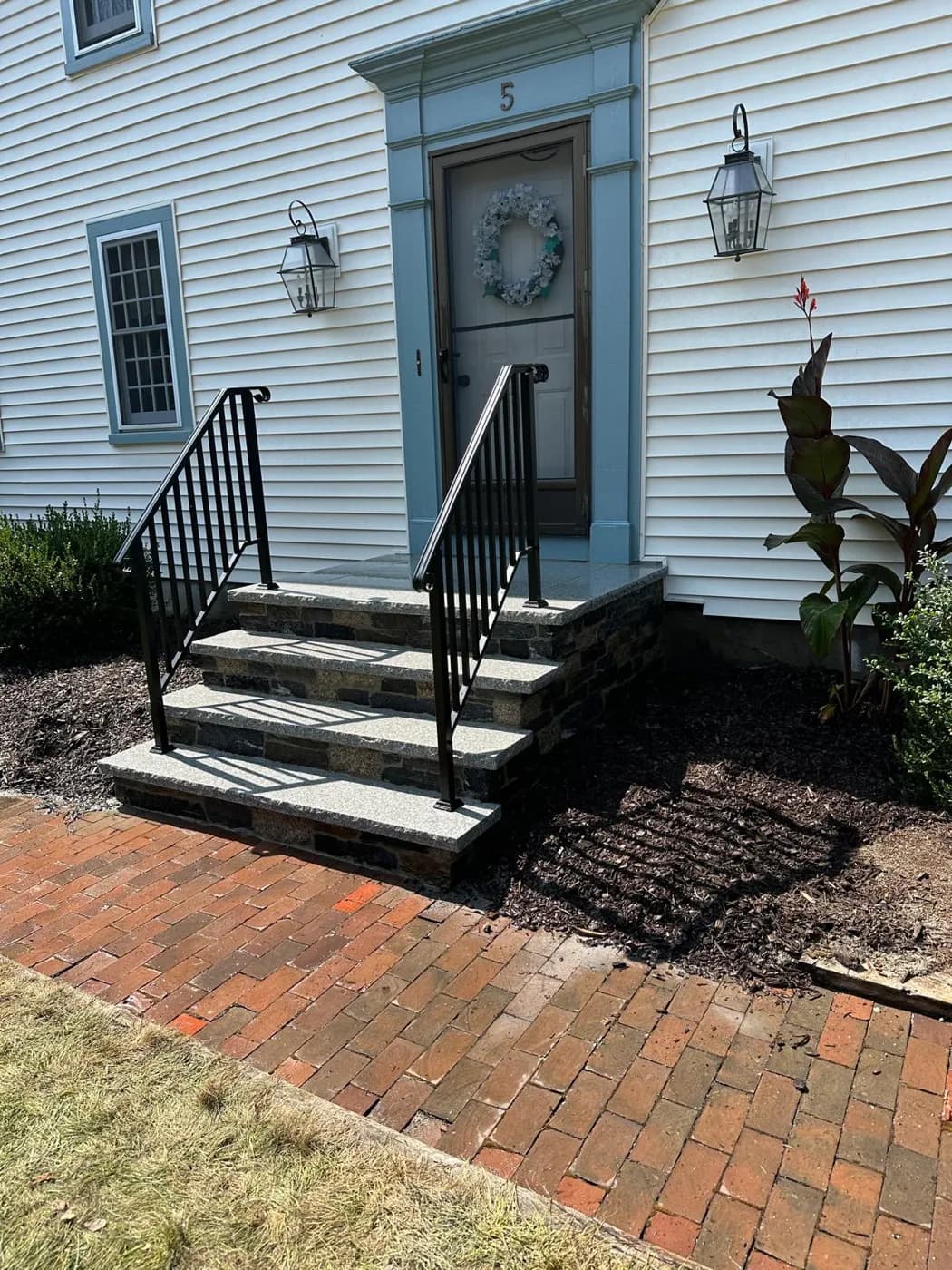
Granite steps are about as New England as it gets. You see them on old colonials in Winchester, on brick homes in Brookline, and on newer houses whose owners want an entry that will outlast the mortgage. Granite handles freeze-thaw, salt and heavy foot traffic better than almost any other material, which is why so many homeowners eventually replace crumbling concrete or brick steps with it.
It is also a premium material, so the first question is fair: what do granite steps actually cost? This guide covers typical 2026 price ranges in Massachusetts, what pushes a quote higher or lower, and how granite compares to brick and precast concrete over the long run.
Typical granite step price ranges in 2026
As a rough guide, a small set of two or three granite treads on a solid base often starts in the low thousands of dollars. A typical front entry with three to five full-width granite steps, including removal of the old steps and a proper base, commonly falls in the $4,000 to $12,000 range. Larger entries, wide landings, curved steps or solid granite blocks rather than treads over a masonry base can go higher.
Those are market-typical ranges, and they vary a lot with the specific stone, the size of the slabs and the site. The only way to know your price is an on-site visit, where the mason can measure the rise, check the foundation and see what is coming out.
Solid granite blocks vs granite treads
There are two common ways to build granite steps. The first uses solid granite blocks, where each step is one large piece of stone that sits on a compacted base. These are heavy, very durable and often need machinery to set. The second uses granite treads (the flat top surface) over risers and a base of brick, block or stone veneer. Treads let you combine the durability of granite underfoot with a brick or fieldstone look on the sides.
Solid blocks usually cost more in material and handling. Treads over a masonry base give more design flexibility and are a good fit when you want the steps to match brick on the house or an existing stone wall.
What changes the price
Size is the obvious one. Wider steps and more of them mean bigger slabs, and granite is priced heavily by size and thickness. The finish matters too: thermal (flamed) finishes give better grip in wet and icy weather, while polished or honed finishes cost differently and can be slippery outside.
Removal of the old steps is often overlooked. Tearing out old concrete or a brick stoop with a rubble core takes labor and disposal fees. The base is next: steps in Massachusetts need a footing or compacted base below the frost line or a design that tolerates frost heave, otherwise they shift after a few winters. Access also counts, because moving heavy stone to a tight front yard or up a slope takes extra equipment and time. Finally, railings, landings and any matching stone veneer on the sides add to the total.
Granite vs brick vs precast concrete
Precast concrete steps are usually the least expensive option up front. They are set as a unit and can look clean, but in salt-heavy New England winters the surface can scale and pit, and the units can settle or tilt if the base is weak.
Brick steps have a classic look and match many older homes around Everett, Melrose and Arlington. They cost less than granite in most cases, but brick and mortar joints take a beating from water, salt and freeze-thaw, so they need repointing and occasional brick replacement over the years.
Granite sits at the top on price, but also on lifespan and low maintenance. A granite tread does not absorb much water, does not spall like brick and does not scale like concrete. Over 30 or more years, many homeowners find that the higher up-front cost evens out because they are not paying for repeat repairs.
Planning around Massachusetts weather and codes
Most step work happens between spring and late fall, when the ground is not frozen and mortar can cure. If your steps are failing in winter, a mason can often do a temporary fix for safety and schedule the full replacement for spring.
Rise and run should stay consistent from step to step, and a railing is often required depending on the number of risers. Your local building department sets the rules, and some towns, especially those with historic districts like Lexington or parts of Brookline, may review changes to the front of a house. A good mason will flag these questions during the estimate.
Caring for granite steps through the winter
One reason granite is popular around Greater Boston is that it needs very little care, but a few habits help it look good for decades. Shovel promptly so snow does not get packed into ice, and use a de-icer labeled safe for stone and masonry rather than straight rock salt. Salt does not damage granite the way it attacks brick or concrete, but it can etch softer joints and stain the masonry around the steps.
Keep an eye on the joints between treads and on the sides of the steps. If the base is brick or stone veneer, those joints will eventually need repointing, just like any other masonry. Check each spring that the steps still drain away from the house and have not settled; a slight pitch on each tread lets water run off instead of pooling and freezing.
Railings set into granite should be checked for rust at the base. Water that sits around a rusting post can crack the stone over time, so touching up paint or resetting a loose post early is a small job that saves a much bigger one.
How to get a granite steps estimate you can trust
A solid estimate names the stone type and finish, whether the steps are solid blocks or treads, the number and size of steps, what happens to the old steps, how the base is built and whether railings are included. If any of that is missing, ask.
Be cautious with a price given without a site visit. The base and removal are where hidden costs live, and they can only be judged in person. A free on-site estimate is the fastest way to get a firm number and a clear picture of your options.
Frequently asked questions
- How much do granite front steps cost in Massachusetts?
- Most typical front entries with three to five granite steps, including removal and a proper base, fall somewhere in the $4,000 to $12,000 range. Small sets can cost less and large or custom entries more. Ranges vary, so an on-site estimate is the way to get your number.
- Are granite steps worth the extra cost?
- For many homeowners, yes. Granite resists salt, water and freeze-thaw far better than brick or precast concrete, so it usually needs much less repair over the years, which offsets the higher upfront price.
- Are granite steps slippery in winter?
- A polished surface can be. Outdoor granite steps are usually given a thermal or textured finish that grips well when wet. Keeping snow cleared and using a de-icer that is safe for stone also helps.
- Can granite treads go on top of my existing brick steps?
- Sometimes. If the brick base is solid and not shifting, granite treads can be set on top. If the base is cracked, sinking or full of loose rubble, it usually needs to be rebuilt first so the new granite does not move.
- How long does it take to install granite steps?
- Many front step projects take a few days once the stone is on site, depending on removal, the base and weather. Custom-cut slabs can add lead time before work starts.
Related services
Found this helpful? Make us a preferred source on Google.
Ready for an exact price?
Get a free, no-pressure in-home estimate. Real numbers for your home, not a phone guess.