
Efflorescence on Brick: What That White Powder Means and How to Fix It
· By Clemente Neto
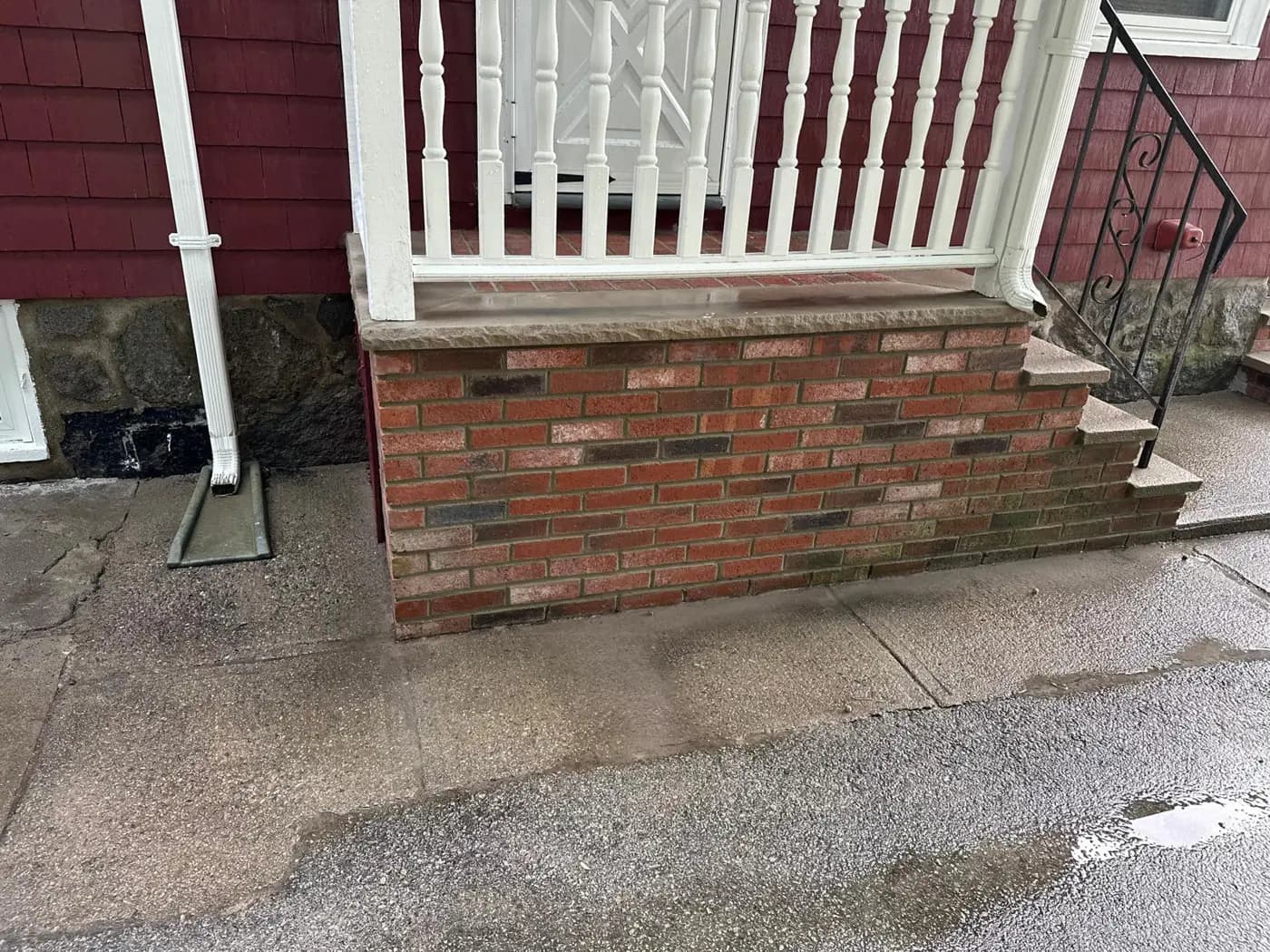
Every spring, homeowners across Greater Boston notice a white, powdery film on their brick steps, foundation walls, chimneys and patios. It can look like mold or paint overspray, and it tends to come back after you scrub it off. That white powder is called efflorescence.
In most cases it is harmless and easy to clean. In some cases it is a sign that water is moving through your masonry in a way that will cause real damage over a few winters. This guide explains what efflorescence is, how to clean it the right way, and how to tell when it is cosmetic and when it is a warning.
What efflorescence actually is
Efflorescence is a deposit of salts left on the surface of brick, stone, concrete or mortar. Those salts are naturally present in the materials or come from the soil and ground water. When water soaks into the masonry, it dissolves the salts. As the water moves to the surface and evaporates, it leaves the salts behind as a white or grayish crust.
So efflorescence needs three things: salts, water and a path for the water to move to the surface. Take away any one of them and it stops. In practice, the one you can control is water.
Why it shows up so often in Massachusetts
New England weather is close to perfect for efflorescence. We get lots of rain and snowmelt that soak into brick, followed by cold, dry stretches and then warm spring days that pull the moisture out. That is why many homeowners first notice it in March, April and May.
New masonry often shows a burst of efflorescence in its first year as construction moisture works its way out. This is sometimes called new building bloom, and it usually fades on its own. On older homes in places like Everett, Melrose and Belmont, efflorescence that keeps returning in the same spot is more often tied to an ongoing water source. Road salt splashed onto front steps can also add to the salt load, although true efflorescence comes from within the masonry.
Harmless or a warning sign?
Light, even efflorescence on new brick that fades over a season or two is usually cosmetic. Efflorescence that shows up in the same area year after year, gets heavier over time, or appears together with other symptoms deserves a closer look.
The symptoms to watch for are crumbling or recessed mortar joints, brick faces flaking off (spalling), damp spots or stains on interior walls behind the masonry, and heavy deposits right below a chimney crown, a window sill, a downspout or a gutter. When you see those together, the efflorescence is not the problem. It is the evidence that water is getting into the masonry and staying there long enough to cause freeze-thaw damage.
How to clean efflorescence safely
Start with the gentlest method. On a dry day, brush the surface with a stiff natural or nylon bristle brush and sweep the powder away. Many light deposits come off with brushing alone. Avoid wire brushes, which can scratch brick and leave metal particles that rust.
If brushing is not enough, rinse with clean water and scrub, then let the surface dry fully. For stubborn deposits, there are masonry cleaners made specifically for efflorescence. Follow the label exactly, wet the surface first, test a small hidden area and rinse thoroughly afterward. Strong acids used carelessly can etch brick, stain it and damage mortar, so if heavy cleaning is needed on an older home, it is worth having a mason handle it.
Avoid power washing at high pressure. It can drive more water into the brick and blast out soft mortar, which can make the problem worse.
Fixing the water source so it does not come back
Cleaning removes the salt you can see. Stopping the water stops new efflorescence. Common fixes include clearing and redirecting gutters and downspouts so they do not dump water against brick, repointing failed mortar joints, repairing or replacing a cracked chimney crown, adding a chimney cap, regrading soil so it slopes away from the foundation, and making sure steps and patios have a proper base and slope to drain.
On brick steps, efflorescence near the bottom treads often points to water wicking up from a poorly drained base. On chimneys, heavy deposits under the crown usually mean the crown is cracked. Fixing the source is what keeps the white powder from coming back every spring.
Where efflorescence shows up most and what it tells you
The location of the white powder is a useful clue. On a chimney, heavy deposits just below the top usually point to a cracked crown or missing cap letting water into the brick from above. On front steps, efflorescence along the lower risers often means water is wicking up from a base that does not drain well, or the treads are pitched toward the house.
On foundation walls, a white band a foot or two above the ground usually means soil moisture is moving up into the masonry, often because the grade slopes toward the house or mulch is piled against the brick. On patios and walkways, efflorescence that appears in the joints after rain can mean the base below is holding water.
Inside a basement, efflorescence on the walls is a sign that ground water is pushing through. That is a drainage question as much as a masonry one, and it is worth addressing before finishing the space with drywall or flooring.
Should you seal brick after cleaning?
Sealing can help in some situations, but it is not a cure for efflorescence and the wrong sealer can trap moisture inside the brick. If water is still getting in from behind or below, a film-forming sealer on the face holds that water in, and freeze-thaw then pops the brick face off.
If sealing makes sense, a breathable, penetrating water repellent made for masonry is the usual choice, applied only after the water source is fixed and the brick has dried out. A mason can tell you during a free estimate whether your brick is a good candidate or whether repairs should come first.
Frequently asked questions
- Is efflorescence on brick bad?
- Efflorescence itself is usually just a cosmetic salt deposit. It becomes a concern when it keeps returning in the same spot or appears with crumbling mortar, flaking brick or damp interior walls, because that points to water moving through the masonry.
- Will efflorescence go away on its own?
- On new masonry it often fades within a season or two as construction moisture dries out. On older masonry with an ongoing water source, it usually keeps coming back until the source is fixed.
- Can I use vinegar to clean efflorescence?
- Diluted vinegar is sometimes used on light deposits, but it is mildly acidic and can affect some mortar if overused. Dry brushing first, then plain water, is the safest start. Rinse well and test any cleaner in a small hidden area first.
- Is efflorescence the same as mold?
- No. Efflorescence is a mineral salt deposit that feels powdery or crystalline and dissolves in water. Mold is a living growth that is usually green, black or fuzzy and tends to appear in shaded, damp spots.
- Does sealing brick stop efflorescence?
- Not by itself. Sealing without fixing the water source can trap moisture and cause spalling. Fix gutters, mortar, crowns or drainage first, then consider a breathable masonry water repellent if needed.
Found this helpful? Make us a preferred source on Google.
Ready for an exact price?
Get a free, no-pressure in-home estimate. Real numbers for your home, not a phone guess.