
Chimney Leaks and Flashing Repair: What Massachusetts Homeowners Should Know
· By Clemente Neto
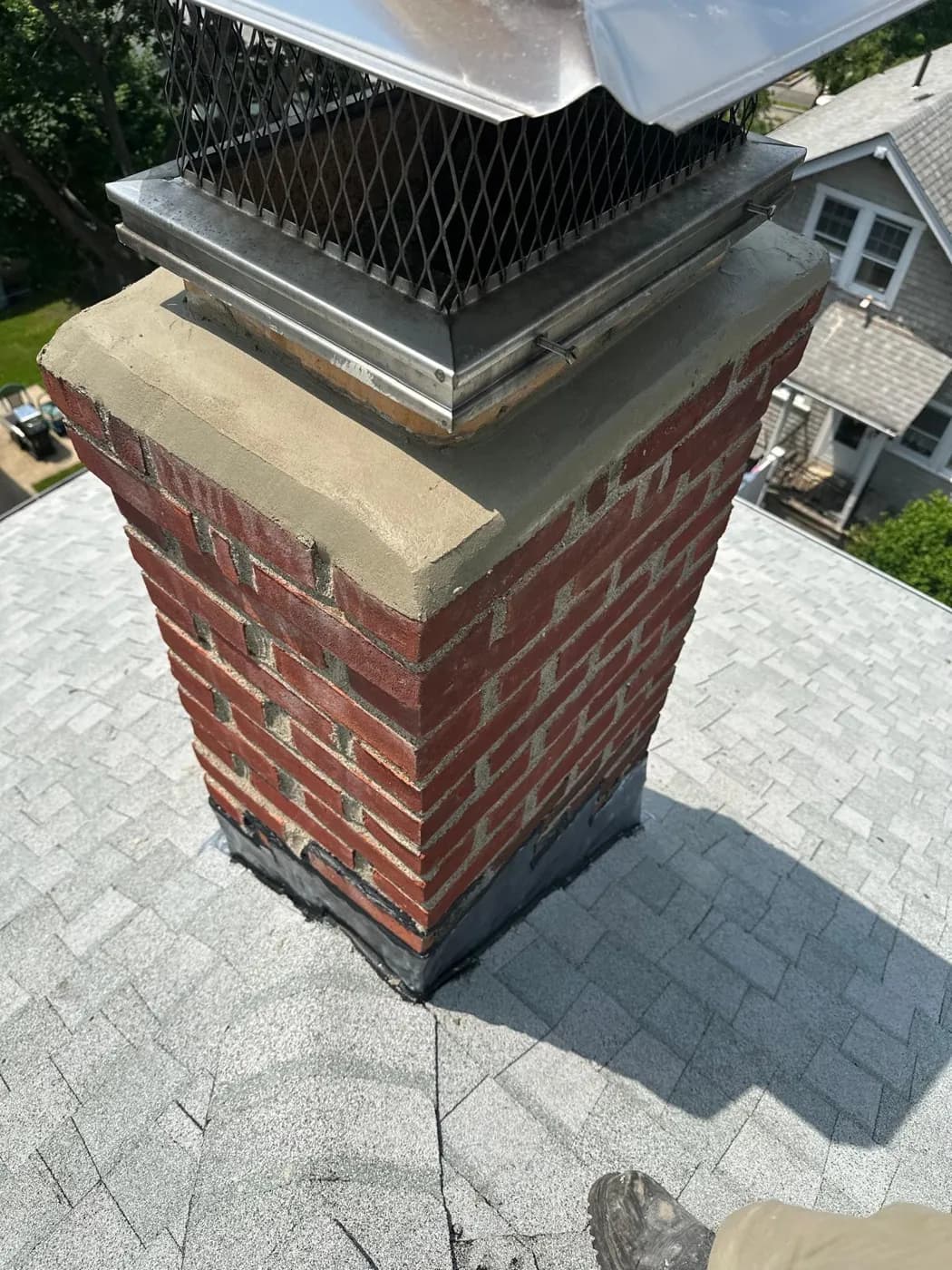
A brown water stain on the ceiling next to the chimney is one of the most common calls a mason gets after a heavy New England storm. The chimney is the biggest hole in your roof, and every joint where brick meets shingles is a spot where water can find its way in.
The tricky part is that a chimney leak can come from several places, and fixing the wrong one wastes money while the stain keeps growing. This guide explains where chimney leaks usually start, what flashing actually is, what a proper repair involves, and when it is time to call a mason rather than reach for another tube of caulk.
The four usual sources of a chimney leak
Most chimney leaks come from one of four places. The first is the flashing, the metal that seals the joint between the chimney and the roof. The second is the crown, the concrete or mortar cap on top of the chimney that sheds water away from the flues. The third is the brick and mortar itself, which can soak up water through cracked joints or porous brick. The fourth is a missing or damaged chimney cap, which lets rain fall straight down the flue.
Sometimes it is more than one. On older homes around Everett, Melrose and Arlington, it is common to find tired flashing and a cracked crown on the same chimney, because both have been through the same decades of freeze-thaw.
What chimney flashing is and how it fails
Proper chimney flashing has two layers. Step flashing is woven into the shingles along the sides of the chimney, one piece per course of shingles. Counter flashing (sometimes called cap flashing) is set into a cut in the mortar joints of the brick and laps down over the step flashing. Together they let water run off the chimney and onto the roof instead of behind it.
Flashing fails in a few predictable ways. The counter flashing pulls out of the mortar joint as the mortar ages. Sealant that was used in place of proper reglet cuts dries and cracks. Metal corrodes. Or the flashing was never done correctly in the first place, with roofing cement smeared over the joint instead of real step and counter flashing. Ice dams, which are common in Massachusetts winters, also push water up under shingles right at the chimney.
How to narrow down where the water is coming in
Look at when the leak shows up. If it appears only during wind-driven rain from one direction, the flashing or brick on that side is a strong suspect. If it shows up during any rain, even straight down, look at the crown and the cap. If it shows up mostly when snow is melting, ice damming near the chimney may be involved.
Look at where the stain is. A stain on the ceiling right beside the chimney often points to flashing. Water inside the firebox or a damp, musty smell from the fireplace suggests a cap or crown issue. White, chalky deposits on the brick inside the attic point to water moving through the masonry itself. A mason on the roof can usually confirm the source by looking at the condition of each part.
What a proper flashing repair involves
A real flashing repair is not a fresh bead of caulk. When the flashing is worn out, the right approach is to remove the old counter flashing, cut a clean reglet (a groove) into the mortar joints, install new step flashing woven with the shingles, and set new counter flashing into the reglet so it laps over the step flashing. The reglet is then sealed with mortar or a compatible sealant.
On many chimneys the mortar joints at the flashing line are already failing, so some repointing at the base of the chimney is part of the job. If the crown is cracked, it makes sense to repair it at the same time, because the scaffolding or roof setup is already in place.
As a rough guide, flashing repair or replacement on a typical residential chimney commonly runs somewhere around $500 to $2,000, more for large chimneys, steep roofs or when roofing work is needed around it. Ranges vary, and an on-site look is the only way to get a firm price.
Why caulk and roofing cement are a temporary fix
Patching with roofing cement or caulk can slow a leak for a season, and sometimes that is the right short-term move in the middle of winter. The problem is that these products crack under sun and frost, and they trap water behind them once they start to fail. Many older chimneys have several layers of old patch stacked on top of each other, hiding the real damage underneath.
If your chimney has been patched more than once and still leaks, it is a sign the flashing needs to be redone properly, and possibly the brick and crown along with it.
Preventing chimney leaks after the repair
Once the flashing is done properly, a few simple habits keep the chimney dry. A chimney cap with a screen keeps rain, leaves and animals out of the flue, and it protects the crown from the full force of the weather. A crown that overhangs the brick slightly, with a drip edge, keeps water from running straight down the face of the chimney.
Keep the roof around the chimney clear of debris that can trap water, and watch for ice dams in heavy snow years, since they push water up under the shingles right at the flashing line. Look at the chimney from the ground each spring and fall with binoculars if needed: loose counter flashing, missing mortar or a cracked crown are all easier to fix when they are small.
If your roof is due for replacement soon, coordinate the timing. Replacing flashing during a reroof is often simpler, and it avoids tearing into brand new shingles a year or two later to fix a leak.
When to call a mason
Call sooner rather than later if the stain is growing, if you see loose brick or mortar on the roof, if there is any sign of rot in the ceiling or framing, or if the leak shows up in more than one storm. Water that gets into the house also soaks the brick, and soaked brick is what freeze-thaw tears apart over the winter.
Flashing sits right at the line between roofing and masonry, so look for someone who can handle both the metal and the brick joints. A free on-site estimate should explain where the water is coming from and what the fix involves before any work starts.
Frequently asked questions
- How do I know if my chimney flashing is leaking?
- Common signs are water stains on the ceiling or walls right next to the chimney, damp wood in the attic around the chimney, and flashing that looks loose, rusted or covered with layers of tar. A roof-level inspection confirms it.
- How much does chimney flashing repair cost in Massachusetts?
- Most homeowners see somewhere around $500 to $2,000 for typical flashing repair or replacement, with steep roofs, large chimneys and extra masonry work pushing it higher. Ranges vary, so an on-site estimate gives you the real number.
- Can I just reseal my chimney flashing with caulk?
- Caulk or roofing cement can slow a leak temporarily, but it cracks under sun and frost and often traps water. If the flashing itself is worn or was installed without proper step and counter flashing, it needs to be replaced to stop the leak for good.
- Is chimney flashing a roofer or a mason job?
- It involves both. Step flashing ties into the shingles, and counter flashing is set into the brick mortar joints. Many leaks also involve mortar or crown damage, so a contractor who handles masonry can address the full source.
- Can a chimney leak if the flashing is fine?
- Yes. A cracked crown, a missing chimney cap, or porous brick and failed mortar can all let water in even when the flashing is sound.
Related services
Serving
Found this helpful? Make us a preferred source on Google.
Ready for an exact price?
Get a free, no-pressure in-home estimate. Real numbers for your home, not a phone guess.