
Brick Steps: Repair or Rebuild? How to Tell What Your Front Steps Need
· By Clemente Neto
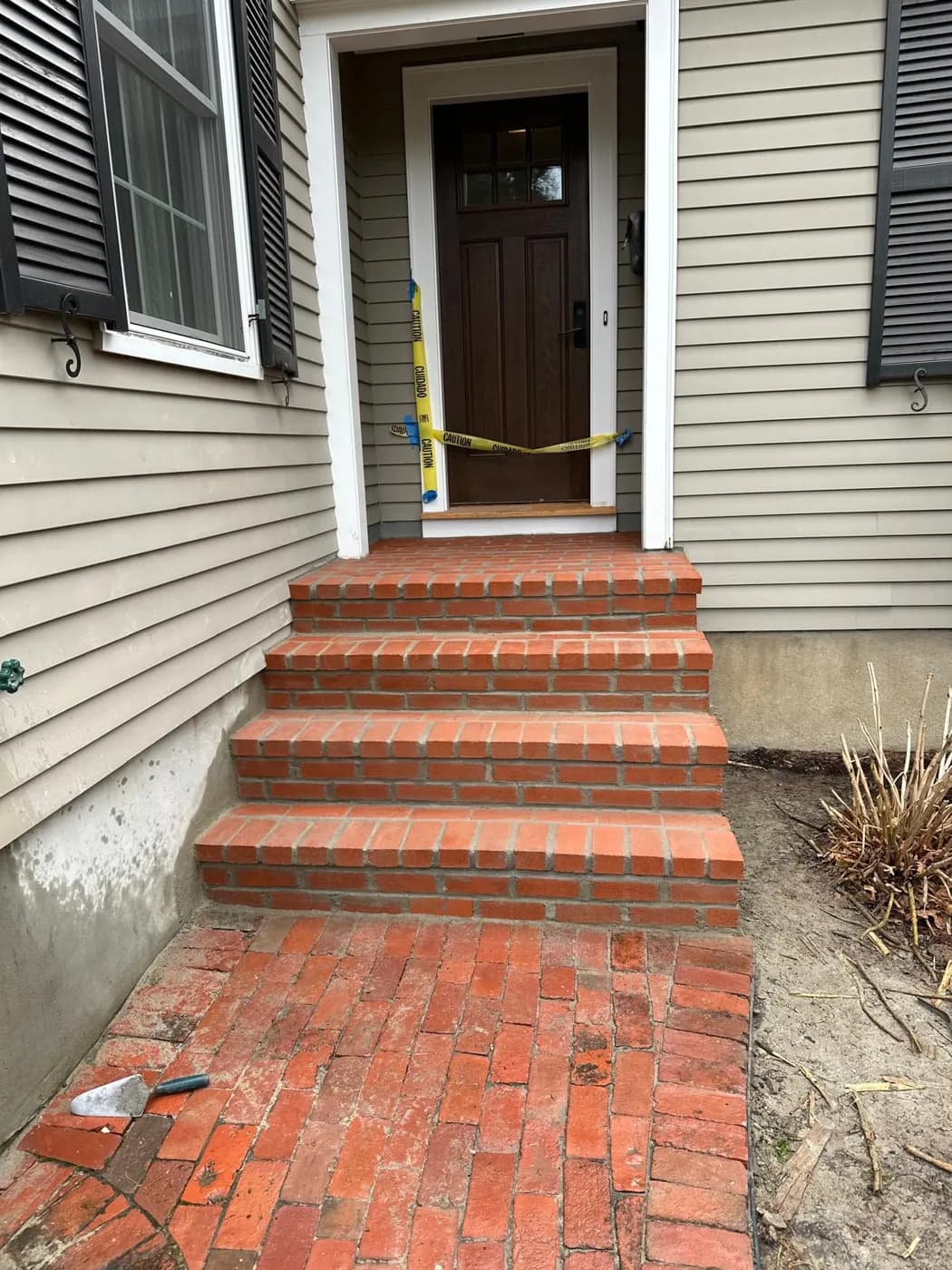
Front steps take more abuse than almost any other part of a house. In Greater Boston they get soaked by rain, frozen and thawed dozens of times every winter, coated in road salt and ice melt, and walked on every single day. Sooner or later a brick comes loose, the mortar joints open up, or the whole set starts leaning away from the door.
The question homeowners ask first is simple: can this be fixed, or does it need to be torn out and rebuilt? The honest answer depends on what is happening underneath the bricks, not just what you see on top. This guide walks through the signs a mason looks for, what each option involves, and how brick compares to granite and precast concrete if you do end up replacing the steps.
Why brick steps fail in Massachusetts
Brick and mortar are porous. Water soaks in, and when the temperature drops below freezing that water expands. Repeat that cycle through a New England winter and the mortar joints slowly crumble, the faces of the bricks start to flake (called spalling), and small gaps let even more water in the next time it rains.
De-icing salt speeds all of this up. Rock salt pulls moisture into the masonry and leaves crystals behind that push the surface apart. Many of the steps we see on older homes in towns like Everett, Arlington and Melrose were also built on a shallow base, sometimes just a few inches of fill. Once that base settles or washes out, the steps sink, tilt or separate from the foundation, and no amount of patching on top will hold for long.
Signs a repair is usually enough
A repair makes sense when the structure under the steps is still sound and the damage is limited to the surface. Typical examples: a few loose or cracked bricks on the treads, mortar joints that are eroded but not missing across the whole set, a cracked cap or nosing brick, or minor spalling on a handful of units.
In those cases a mason can cut out the failed mortar and repoint the joints, reset or replace the loose bricks with a close color match, and rebuild a damaged tread or riser section. A good test is to stand on each step and shift your weight. If the steps feel solid, do not rock, and are not pulling away from the house, you are probably looking at a repair.
Signs the steps need a full rebuild
A rebuild is usually the better value when the problem is structural. Watch for steps that have sunk or tilted, a visible gap between the top landing and the house, cracks that run through several courses of brick instead of just the joints, bricks that are loose across most of the treads, or soft, crumbling brick that breaks apart when you press on it.
Water damage at the foundation is another red flag. If the top landing slopes toward the house, water can run into the basement or rot the sill. Patching a set of steps with a failing base often means paying for the same repair again in two or three winters. Rebuilding lets the mason dig out the old fill, set a proper compacted base or footing below the frost line where needed, and pitch the treads so water runs away from the door.
What each option typically costs
As a rough guide, small brick step repairs in the Boston area often land in the range of a few hundred dollars up to a couple of thousand, depending on how many bricks and joints are involved. A full tear out and rebuild of a typical set of front steps usually runs several thousand dollars, and larger sets, wide landings or added railings can push the number higher.
These are market ranges, not a quote, and prices vary with the size of the steps, how hard it is to reach the site, the material you pick and whether old concrete or block has to be removed underneath. The only way to know your number is to have a mason look at the steps in person. A free estimate should tell you clearly whether the base is sound and why repair or rebuild is being recommended.
Brick vs granite vs precast steps
If you are replacing the steps, you have three common choices. Brick matches older homes and can be repaired one unit at a time, but it has many mortar joints that need attention every so often. Granite is solid stone, extremely durable and handles salt and freeze thaw very well, and it is common on colonials and Victorians across Winchester, Lexington and Belmont. It typically costs more up front but needs very little maintenance.
Precast concrete steps are set in one piece and are usually the fastest and least expensive option. They work well on simple entries, but they have a more utilitarian look, can show salt damage on the surface over time, and are harder to customize to an odd layout. Many homeowners end up with a mix, such as granite treads over brick risers, to get the look of brick with the durability of stone on the walking surface.
What a proper rebuild looks like
When steps are rebuilt the right way, most of the work happens before the first new brick goes down. The old steps are broken out and hauled away, the loose fill underneath is dug out, and the mason checks how the steps tie into the foundation. A solid base of compacted crushed stone, or a concrete footing where the design calls for it, gives the new steps something stable to sit on through every frost cycle.
From there the risers and treads are laid with a mortar suited to the brick, joints are tooled tight so they shed water, and each tread gets a slight pitch so rain and meltwater run off instead of sitting on the surface. A properly rebuilt set of steps should feel solid underfoot and stay level for many winters.
How to make repaired or new steps last
Whatever you choose, a few habits add years to your steps. Use a de-icer that is gentler on masonry instead of plain rock salt, shovel before the snow is packed into ice, and keep gutters and downspouts from dumping water onto the steps. Look at the joints each spring and have small gaps repointed before they turn into loose bricks.
If you are not sure which side of the line your steps are on, schedule a free estimate. A quick inspection of the base, the joints and the connection to the house usually answers the repair or rebuild question in a few minutes.
Frequently asked questions
- Can I just patch loose bricks on my front steps myself?
- You can reset a single loose brick with mortar mix, but if several bricks are loose or the steps move under your weight, the base is likely failing. A surface patch will not hold, and the repair usually has to be redone by a mason.
- How long do brick front steps last?
- Well built brick steps on a proper base can last decades, with repointing every so often. Steps built on a shallow or poorly drained base in Massachusetts often start failing much sooner because of freeze thaw and road salt.
- Why are my brick steps pulling away from the house?
- Separation usually means the base under the steps has settled or was never deep enough to resist frost heave. It is a structural sign, and in most cases the steps need to be rebuilt on a new, compacted base.
- Is granite better than brick for front steps?
- Granite is more resistant to salt and freezing and needs less upkeep, so it is a strong choice in New England. Brick costs less to repair piece by piece and matches many older homes. The right choice depends on your budget and the look of the house.
- Do I need a permit to rebuild front steps in Massachusetts?
- It depends on the town and the scope. Rebuilding steps, especially with a new landing or railing, often requires a building permit. Your contractor should check with the local building department before work starts.
Related services
Found this helpful? Make us a preferred source on Google.
Ready for an exact price?
Get a free, no-pressure in-home estimate. Real numbers for your home, not a phone guess.